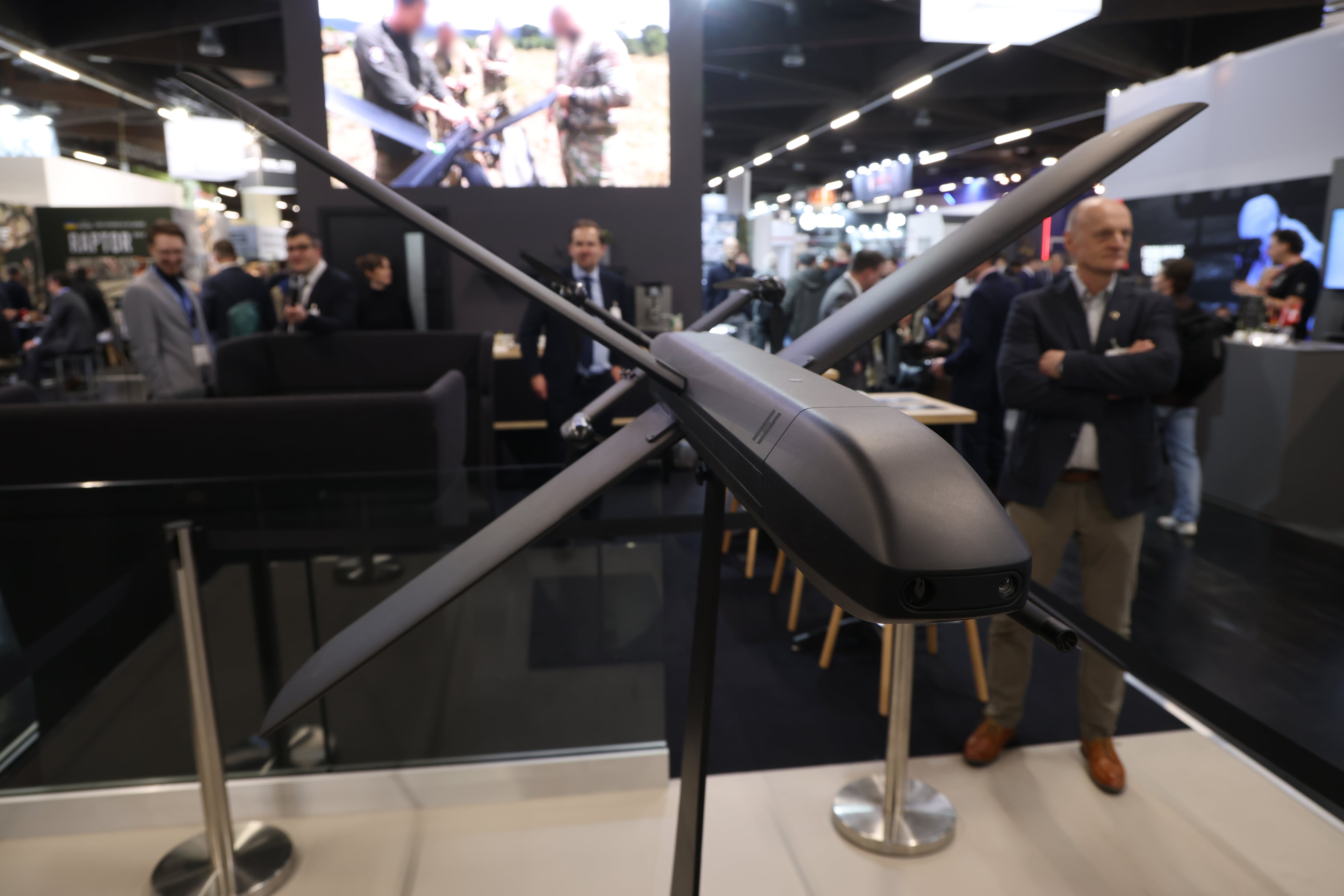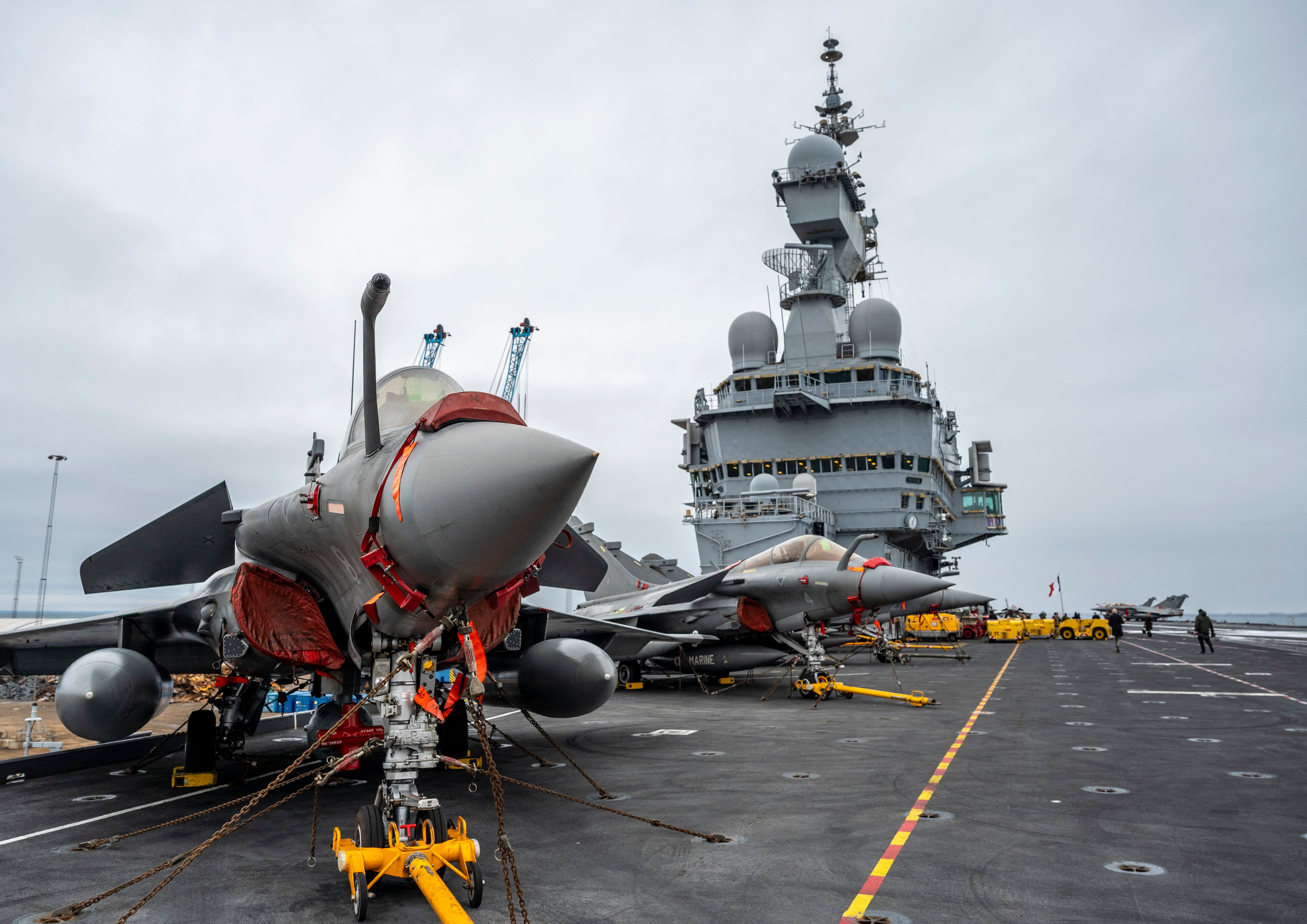
MILAN — A drone suspected to be of Russian origin was intercepted by the Swedish Navy some 13 kilometers from France’s nuclear-powered aircraft carrier anchored in the port of Malmö, according to Sweden’s chief of defense.
While out on a patrol in Oresund, a narrow strait that separates Denmark and Sweden, a Swedish Navy ship detected a suspicious unmanned aerial system approaching the French vessel.
“Following the observation, the armed forces took countermeasures to disrupt the suspected drone – contact with it was subsequently lost, but no other ones have been observed,” the Swedish Armed Forces said in a statement.
Speaking to local media outlet SVT Nyheter, Minister of Defense Pål Jonson said that it is likely the drone was Russian, as a Russian military ship was detected operating in the immediate vicinity of the Feb. 26 incident.
Jonson called the episode a probable “violation of Swedish airspace,” and an investigation was launched to determine whether a breach was committed.
The Swedish Armed Forces declined to provide further details.
Sweden announced last month that it is undertaking a major revamp of its unmanned capabilities, including the procurement of remote-controlled electronic warfare systems that consist of drone detection sensors, which could be based on ships or ground units.
While authorities have not yet confirmed the identity of Russian the ship, several open-source maritime observers compiled a list of Russian-flagged vessels spotted in the area roughly around the same time. These included the U.S.-sanctioned Sparta IV, a cargo ship flying the Russian flag, known for transporting military equipment between Syria and Russia.
According to Guillaume Vernet, spokesman for the French General Staff, the Swedish countermeasures used to repel the drone away from the nuclear-powered aircraft carrier Charles de Gaulle “worked perfectly” and did not disrupt the flagship’s activities.
The presence of the aircraft carrier is linked to ongoing and upcoming NATO exercise activities and deployments, including the Orion 2026 exercises in the North Atlantic and Baltic regions, which began earlier this month and will run until March.
Elisabeth Gosselin-Malo is a Europe correspondent for Defense News. She covers a wide range of topics related to military procurement and international security, and specializes in reporting on the aviation sector. She is based in Milan, Italy.