-

Air Force’s next nuclear missile at risk after costs spike
The LGM-35A Sentinel nuclear missile has seen its costs increase at least 37%, triggering a review that could see the program restructured or canceled.
-
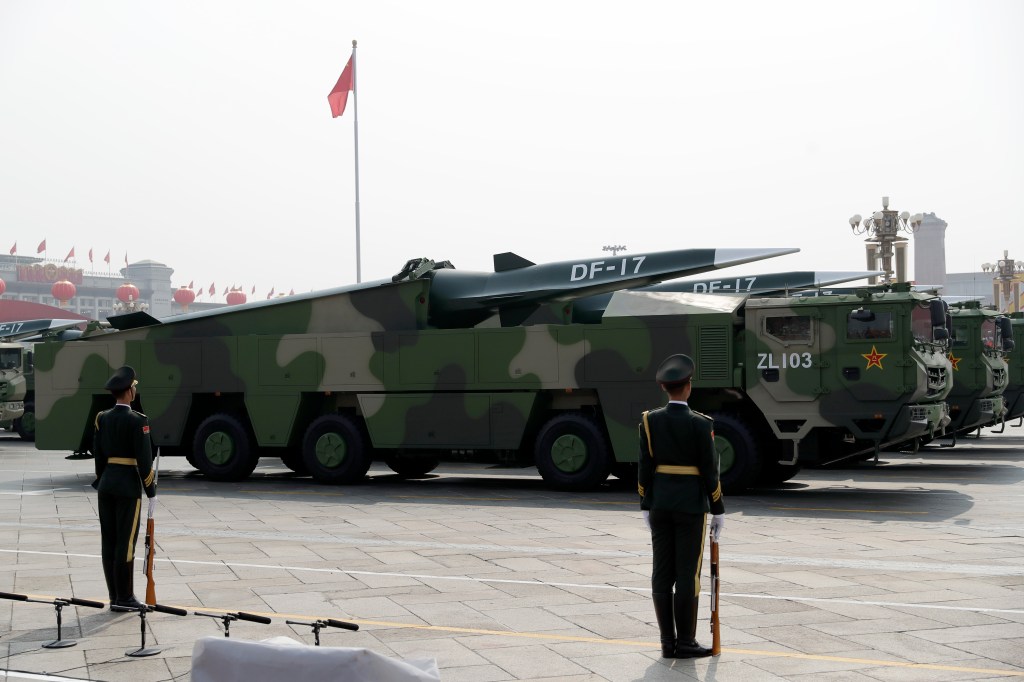
The US is failing to quickly field hypersonic missile defense
If Washington does not act quickly to expedite the Pentagon’s fielding of hypersonic missile defense capabilities, deterrence may fail in the Pacific.
-

In first, UK downs aerial drone with test shot from DragonFire laser
The trial with the direct-energy weapon is considered a significant milestone toward the deployment of the system, possibly within five years.
-

Germany spends $1.3 billion on missile-based short-range air defenses
Berlin’s forces will get a multi-level shield against drones, missiles and low-flying aircraft, starting with the development of an IRIS-T derivative.
-

Lockheed to test Patriot and Aegis integration in live-fire test
Lockheed Martin is planning a major live-fire test to prove the most advanced Patriot missile can be integrated with the Aegis Combat System.
-

How AI, ML and observability can transform SOCOM information dominance
The command doesn’t need to rearchitect or rebuild its sprawling Special Operations Forces Information Environment, or SIE, from the ground up.
-

Secretive surveillance flights keep close watch on Russia and Ukraine
NATO policing of its airspace has ramped up since the Russian invasion of Ukraine almost two years ago.
-

Pakistan’s Air Force says it has a hypersonic-capable missile
The service said the capability is meant to help create a “potent force and to rebalance the power dynamics in the region.”
-

AI-enabled Valkyrie drone teases future of US Air Force fleet
“If I’m flying around in my fighter,” Col. Tucker Hamilton said, “I can imagine a world where I have multiple drones able to conduct some missions.”
-

Pentagon rewrites space classification policy to improve info-sharing
The policy, approved in late December, is itself classified, according to the Pentagon’s assistant secretary of defense for space policy.
-
Air Force’s next nuclear missile at risk after costs spike
The LGM-35A Sentinel nuclear missile has seen its costs increase at least 37%, triggering a review that could see the program restructured or canceled.
-
The US is failing to quickly field hypersonic missile defense
If Washington does not act quickly to expedite the Pentagon’s fielding of hypersonic missile defense capabilities, deterrence may fail in the Pacific.
-
In first, UK downs aerial drone with test shot from DragonFire laser
The trial with the direct-energy weapon is considered a significant milestone toward the deployment of the system, possibly within five years.
-
Germany spends $1.3 billion on missile-based short-range air defenses
Berlin’s forces will get a multi-level shield against drones, missiles and low-flying aircraft, starting with the development of an IRIS-T derivative.
-
Lockheed to test Patriot and Aegis integration in live-fire test
Lockheed Martin is planning a major live-fire test to prove the most advanced Patriot missile can be integrated with the Aegis Combat System.
-
How AI, ML and observability can transform SOCOM information dominance
The command doesn’t need to rearchitect or rebuild its sprawling Special Operations Forces Information Environment, or SIE, from the ground up.
-
Secretive surveillance flights keep close watch on Russia and Ukraine
NATO policing of its airspace has ramped up since the Russian invasion of Ukraine almost two years ago.
-
Pakistan’s Air Force says it has a hypersonic-capable missile
The service said the capability is meant to help create a “potent force and to rebalance the power dynamics in the region.”
-
AI-enabled Valkyrie drone teases future of US Air Force fleet
“If I’m flying around in my fighter,” Col. Tucker Hamilton said, “I can imagine a world where I have multiple drones able to conduct some missions.”
-
Pentagon rewrites space classification policy to improve info-sharing
The policy, approved in late December, is itself classified, according to the Pentagon’s assistant secretary of defense for space policy.