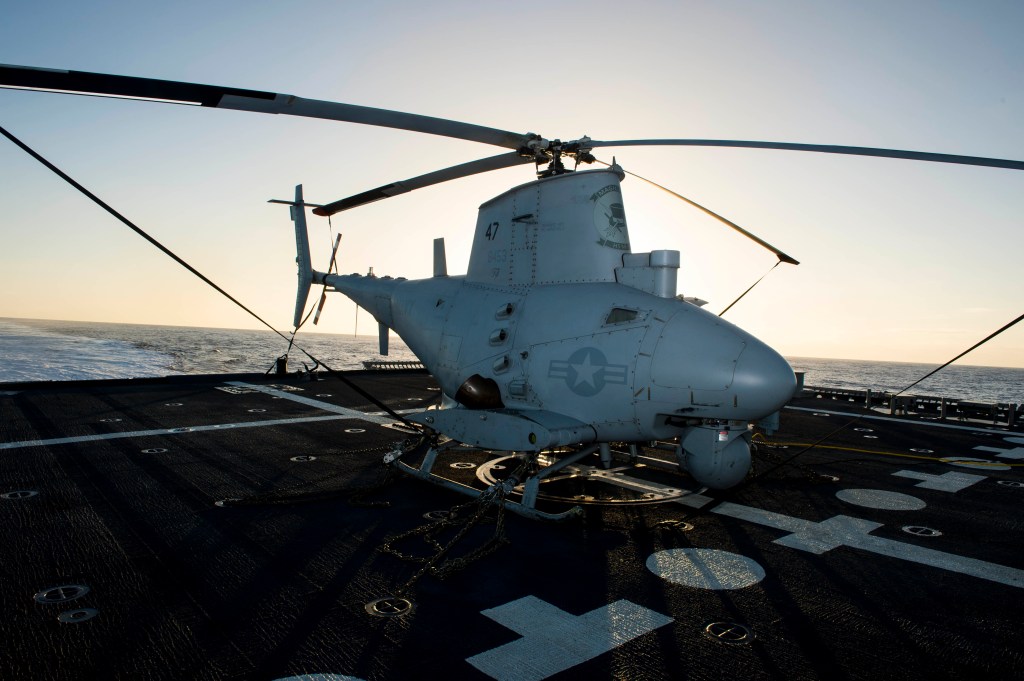
The Navy’s Littoral Combat Ships are upgrading their capabilities to control their MQ-8 Fire Scout unmanned helicopters.
The USS Coronado is the first to be equipped with the improved Navy control hardware and Raytheon control software for its Fire Scout mission control system (MCS), according to a Raytheon news release.
“Navy hardware and Raytheon’s software are built with an open architecture, maximizing flexibility to add new technology as needed,” the company said. “Under a related effort, the Navy’s Common Control System, or NCCS, will be able to control any air, ground, surface and subsurface vehicles as they deploy with the fleet. Built on the flexible foundation of Fire Scout MCS, that capability will reduce Navy-wide implementation costs and training requirements for unmanned systems.”
“Our new Fire Scout MCS enables Fire Scout to bring more mission to more areas,” said Capt. Jeff Dodge, the Navy’s Fire Scout program manager. “Fire Scout is a proven capability in dynamic littoral environments, and now provides the potential for multiple platforms to be controlled from a single MCS aboard the ship.”