
-

Romanian servers targeted by Russian hackers to scoop up emails about NATO, EU
Hackers linked to Russia’s FSB quietly compromised a Romanian government organization’s servers to collect emails related to NATO and the EU in December 2025, a Slovak cybersecurity firm has revealed.
-

Hackers breach US Air Force flagship Cloud One computing platform
Hackers have reportedly breached the service’s flagship cloud computing platform, in a development that could jeopardize a vast swathe of tactical, personnel and logistics data.
-
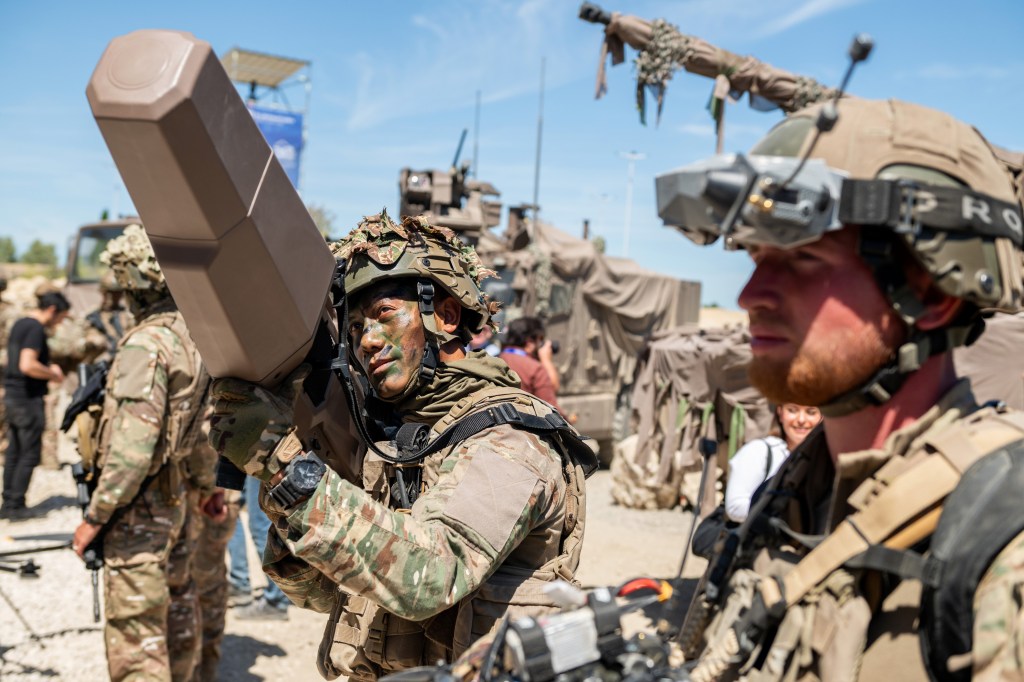
France kicks off defense-industry pact to build up counter-drone efforts
The wars in Ukraine and the Middle East have been a “quite brutal reality check,” and French forces have an urgent need for counter-drone capabilities, said Alice Rufo, France’s junior minister for the armed forces.


SPECIAL FEATURES


Space
-

Europe’s push to reduce US reliance is reshaping the defense space market
Spooked by U.S. restrictions on satellite data access during recent crises, European countries are scrambling to catch up on sovereign capabilities.
Artificial Intelligence
-

VA inventory report reveals 367 AI systems operating in healthcare, benefits and services
A recently released report catalogs AI uses across the VA, from clinical tools used during patient care to systems that help process benefits.
-
The unlikely role of Operation Epic Fury in a Mississippi AI data center lawsuit
-
Ukraine’s defense AI chief predicts ‘new paradigm’ of warfare
-
AI companies have a responsibility to safeguard models against exploitation, Pentagon chief technology officer says
-
AI tool has ‘saved a lot of aircraft’ in Epic Fury, AFSOC chief says
VIDEOS
-
A race for lifesaving battlefield drones | Defense News Weekly Full Episode 11.24.26
While Ukrainian innovators pioneer frontline aerial drone evacuation, DARPA develops AI-assisted robots to find and assess injured troops and civilians. The race to save lives is on.
Featured Videos






Cyber
-

German firm Hensoldt acquires UK radar maker
The terms of the deal have not been made public, but Hensoldt said subject to regulatory approval it hoped to close the takeover by the end of September.
Electronic Warfare
-
Europe’s push to reduce US reliance is reshaping the defense space market
Spooked by U.S. restrictions on satellite data access during recent crises, European countries are scrambling to catch up on sovereign capabilities.
More Stories
-
State Election Systems to Get More Federal Aid for Security
Citing increasingly sophisticated bad actors in cyberspace and an election infrastructure that’s “vital to our national interests,” Homeland Security Secretary Jeh Johnson is designating U.S. election systems as critical infrastructure, a move that provides more federal help for state and local governments to keep their election systems safe from tampering. “Given the vital role elections…
-
Air Force Seeks Software to Predict Cyberattacks
Sotera has been awarded a $9.8 million Air Force contract to develop software that will predict cyberattacks. Under the contract, which aims to develop a predictive analysis software prototype, Sotera will “develop capabilities allowing for multi-source data fusion, predicting malicious cyber operator activities, and serving as the architect and integrator of the experimental software prototype,”…
-
Cybersecurity Plan Requires Too Long to Implement [Commentary]
On Nov. 9, 2016, my colleague, Chris Pogue, and I published our cybersecurity wish list for President-elect Donald Trump. On Dec. 1, 2016, President Obama’s Commission on Enhancing National Cybersecurity issued its Report on Securing and Growing the Digital Economy. The Commission was charged with “developing actionable recommendations for securing and growing the digital economy…
-
Putin ordered influence operation against U.S., says report
In a highly anticipated report, the intelligence community provided brief details regarding the recent Russian hacking incidents.
-
Leidos Unseats Raytheon To Deliver Next Variant of US Army Fires Support System
Leidos won a contract Dec. 29 to deliver the next iteration of the Army’s Advanced Field Artillery Tactical Data System, unseating Raytheon as the long-time incumbent on the program.
-
US Air Force Creates Group to Recruit Cyber Nerds for Weapons Programs
The Air Force is forming a troop of cyber geeks hand-picked from the commercial technology sector to solve software problems on troubled weapons programs, the service’s top civilian announced Friday.
-
Global airborne ISR market to grow, says report
“Many countries are in the process of augmenting their maritime security capabilities to ensure that hostile and illegal infiltration do not take place in their territories.”
-
U.S. intelligence director questioned in Senate over responses to cyberattacks
During a hearing in front of the Senate Armed Services Committee, members from the intelligence community provided details into the government’s handling of various cyber incidents.
-
New OPM Guidance Updates IT, Cyber Job Coding
A Jan. 4 memorandum from the Office of Personnel Management explains updated procedures for identifying and coding federal positions with information technology, cybersecurity and cyber-related functions. The coding effort began in 2013 in an effort to minimize the federal cybersecurity knowledge, skills and abilities gap. Supporting requirements under the Federal Cybersecurity Workforce Assessment Act of…
-
New administration needs comprehensive cybersecurity approach, group says
The incoming Trump administration should move quickly to streamline cybersecurity policy, programs and oversight, refocus and reinforce cyber mission operational components, and prioritize data protection and cyberattack deterrence equally, according to a new report by public policy research institution the Center for Strategic & International Studies. In “From Awareness to Action: A Cybersecurity Agenda for…
-
US Air Force Creates Group to Recuit Cyber Nerds for Weapons Programs
WASHINGTON — The US Air Force is forming a troop of cyber geeks hand-picked from the commercial technology sector to solve software problems on troubled weapons programs, the service’s top civilian announced Friday. Like the Pentagon’s Defense Digital Service (DDS) before it, the Air Force Digital Service (AFDS) will recruit engineers from the private sector…