
-

Romanian servers targeted by Russian hackers to scoop up emails about NATO, EU
Hackers linked to Russia’s FSB quietly compromised a Romanian government organization’s servers to collect emails related to NATO and the EU in December 2025, a Slovak cybersecurity firm has revealed.
-

‘Open the hives’ — Why France is turning tank gunners into FPV pilots
Cpl. Igor started a new job this year, swapping the sights of a 105 mm gun on the French Army’s AMX 10 RC reconnaissance vehicle for first-person view goggles and a handheld controller.
-
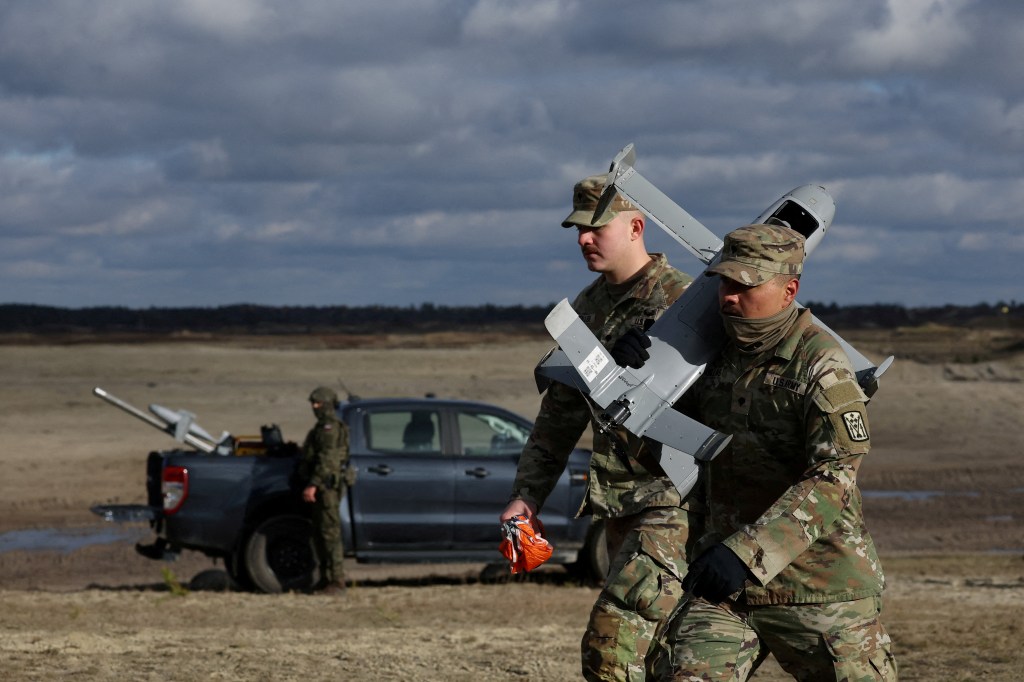
Europe weighs giving utilities, infrastructure companies more powers to bring down drones
Offials are worried that drone attacks could knock out power to millions of people — as has happened frequently in Ukraine after Russian strikes.

SPECIAL FEATURES



Space
-

Europe’s push to reduce US reliance is reshaping the defense space market
Spooked by U.S. restrictions on satellite data access during recent crises, European countries are scrambling to catch up on sovereign capabilities.
Artificial Intelligence
-

VA inventory report reveals 367 AI systems operating in healthcare, benefits and services
A recently released report catalogs AI uses across the VA, from clinical tools used during patient care to systems that help process benefits.
-
The unlikely role of Operation Epic Fury in a Mississippi AI data center lawsuit
-
Ukraine’s defense AI chief predicts ‘new paradigm’ of warfare
-
AI companies have a responsibility to safeguard models against exploitation, Pentagon chief technology officer says
-
AI tool has ‘saved a lot of aircraft’ in Epic Fury, AFSOC chief says
VIDEOS
-
New tools for troops to gun down drones | Defense News Weekly Full Episode 11.17.26
The visceral threat of cheap drones delivering pinpoint, guided anti-personnel munitions continues to spawn new protection systems. Plus, an interview with a Medal of Honor recipient.
Featured Videos




Cyber
-

German firm Hensoldt acquires UK radar maker
The terms of the deal have not been made public, but Hensoldt said subject to regulatory approval it hoped to close the takeover by the end of September.
Electronic Warfare
-
Europe’s push to reduce US reliance is reshaping the defense space market
Spooked by U.S. restrictions on satellite data access during recent crises, European countries are scrambling to catch up on sovereign capabilities.
More Stories
-
New ICBM will take US nuclear missiles out of Cold War era
A new nuclear missile is coming, a gigantic ICBM called the Sentinel.
-
Report: Military caregivers pay more than their civilian counterparts
A new AARP report shows that military and veteran caregivers pay more out of pocket than their civilian counterparts.
-
Pinups for Vets’ October model on the importance of giving back to veterans after service
“You answered your call — thank you,” says Navy vet Gayle Gaumer, a 2023 Pinups for Vets model on how she tries to give back now that she is out of uniform.
-
Tuberville folds, Army gets a female sniper, and a rocket-powered drone | Military Headlines
Sen. Tommy Tuberville drops his hold on military nominations, A female soldier breaks new ground as a sniper, and a rocket-powered reusable drone is unveiled.
-
The sound of healing: can this alternative treatment method offer peace for vets?
What to calm yourself and try a new way to achieve peace? An alternative healing method using sound might be an answer. Our reporter tries it out at MCON 2023.
-
Why do vets pay more for healthcare than civilians? | Defense News Weekly Full Episode 12.9.23
A report looks at why veterans pay more for healthcare, a deadlock is broken on military nominations, and the Army gets its first active-duty female sniper.
-
Swedish military sharpens its focus on submarine tech in 2024
The country’s Navy wants new capabilities for its new submarine fleet and for countering sea mines.
-
Pentagon makes progress on Zero Trust, but next steps will be critical
Not everyone has the in-house expertise or technology that DISA does, but everyone has the capabilities to pick a place to start and make progress.
-
Drag race: hypersonic threats are slow enough for US missile defenses
Contrary to common claims, hypersonic weapons are no wonder weapons for cracking air-defense shields, argue analysts David Wright and Cameron Tracy.
-
Communication of intent and the importance of language to deterrence
The Biden administration’s rhetoric may be critical to deter not only escalation, but to stop persistent attacks in the Middle East.