-
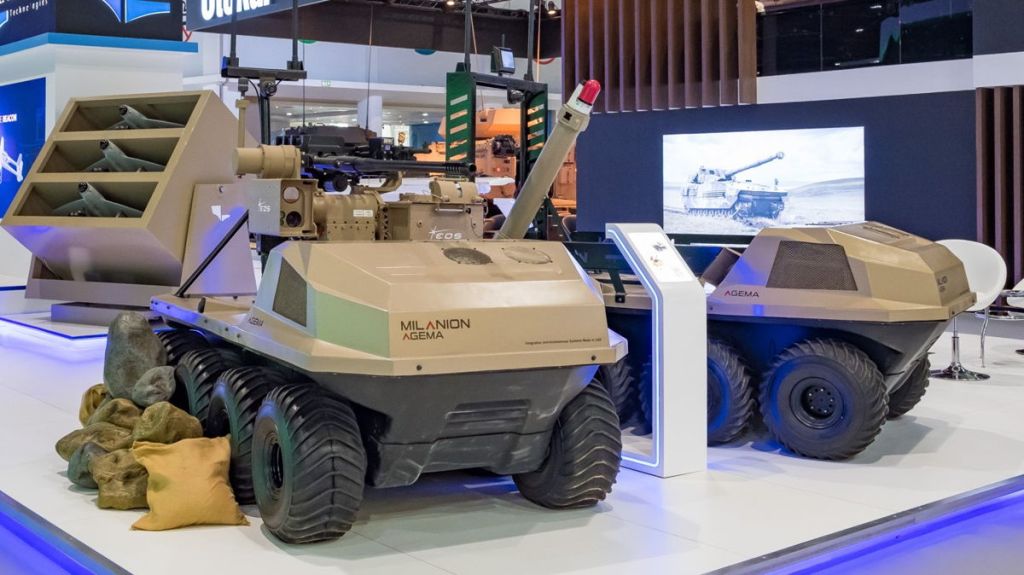
Emirati firm signs agreement with Ukrainian Armor on robotic vehicles
Milanion Group has signed a memorandum of understanding with Ukrainian Armor to give the latter distribution rights of unmanned ground vehicle Agema.
-

‘You can’t have fires on boats’: Navy research on safer zinc batteries moves forward
The Naval Research Lab sees zinc-based batteries as a reusable replacement for fire-prone and single-use batteries.
-

Commandant calls on senior Marines to stop ‘shackling’ junior leaders
It’s time for senior leaders to let go of the reins and allow small unit leaders the freedom to make decisions, Marine Corps Commandant Gen. David Berger says.
-

Space-based optical communications: updating SATCOM for the information age
Space-based laser communications are central to DoD’s plans for JADC2. The efforts are underfunded, and the cost of inaction is high, an analyst argues.
-

Is expeditionary foraging in the Corps’ future?
Future Marines might deploy with small water purifiers, which can be carried by a single Marine, and wearable power generators.
-

Northrop Grumman, Ball Aerospace clear milestone for missile warning payload
The payload will fly on one of the first geostationary Next Generation Overhead Persistent Infrared satellites.
-

Autonomous systems to help NATO examine climate change effects in Arctic waters
NATO sees continued investment in autonomous platforms, artificial intelligence and big data as critical to understanding how a thawing Arctic Ocean will impact military operations, planning, and infrastructure in the High North.
-

DoD pledges militarywide alignment on electromagnetic spectrum ops
Officials shared some details from the highly anticipated, but classified implementation plan for the DoD’s spectrum superiority strategy.
-

Putin’s push for isolated internet will shift the Russian cyber landscape
The U.S. and NATO bloc must pay more attention to domestic Russian internet policy developments, a cyber researcher argues.
-

The Space Force wants to manage acquisitions by portfolio
Changing the service’s budget practices could enable more flexibility to shift funding among programs.
-
Emirati firm signs agreement with Ukrainian Armor on robotic vehicles
Milanion Group has signed a memorandum of understanding with Ukrainian Armor to give the latter distribution rights of unmanned ground vehicle Agema.
-
‘You can’t have fires on boats’: Navy research on safer zinc batteries moves forward
The Naval Research Lab sees zinc-based batteries as a reusable replacement for fire-prone and single-use batteries.
-
Commandant calls on senior Marines to stop ‘shackling’ junior leaders
It’s time for senior leaders to let go of the reins and allow small unit leaders the freedom to make decisions, Marine Corps Commandant Gen. David Berger says.
-
Space-based optical communications: updating SATCOM for the information age
Space-based laser communications are central to DoD’s plans for JADC2. The efforts are underfunded, and the cost of inaction is high, an analyst argues.
-
Is expeditionary foraging in the Corps’ future?
Future Marines might deploy with small water purifiers, which can be carried by a single Marine, and wearable power generators.
-
Northrop Grumman, Ball Aerospace clear milestone for missile warning payload
The payload will fly on one of the first geostationary Next Generation Overhead Persistent Infrared satellites.
-
Autonomous systems to help NATO examine climate change effects in Arctic waters
NATO sees continued investment in autonomous platforms, artificial intelligence and big data as critical to understanding how a thawing Arctic Ocean will impact military operations, planning, and infrastructure in the High North.
-
DoD pledges militarywide alignment on electromagnetic spectrum ops
Officials shared some details from the highly anticipated, but classified implementation plan for the DoD’s spectrum superiority strategy.
-
Putin’s push for isolated internet will shift the Russian cyber landscape
The U.S. and NATO bloc must pay more attention to domestic Russian internet policy developments, a cyber researcher argues.
-
The Space Force wants to manage acquisitions by portfolio
Changing the service’s budget practices could enable more flexibility to shift funding among programs.