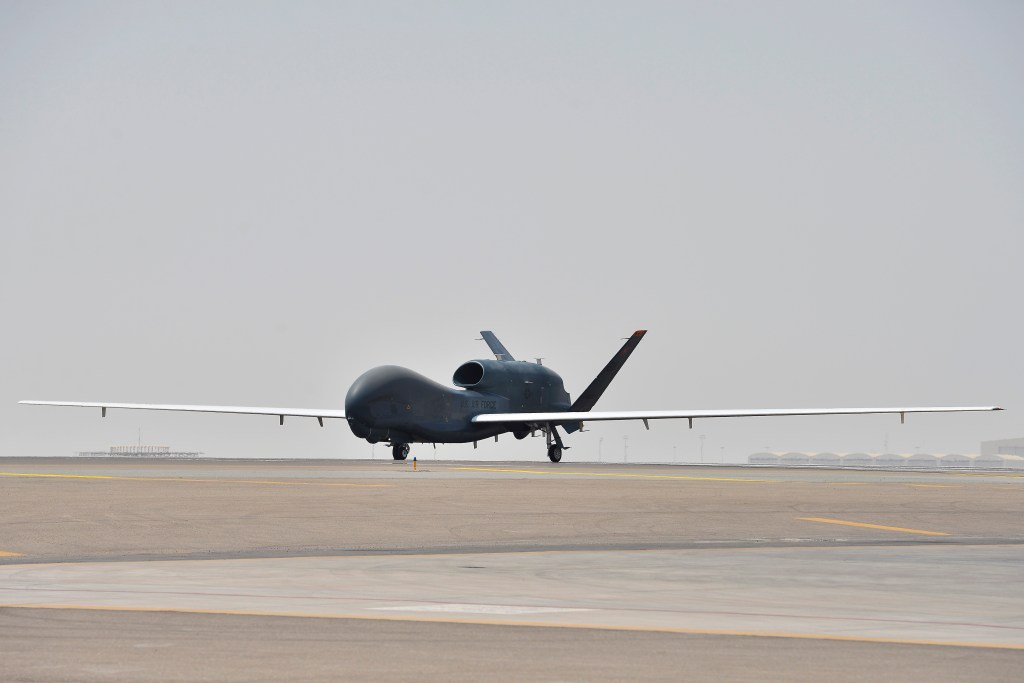
The Air Force has chosen its first batch of 10 enlisted airmen to train and fly large, satellite controlled drones. This week’s news follows an announcement in December that the Air Force will allow enlisted airmen to fly the RQ-4 Global Hawk, an unarmed high-altitude, long endurance unmanned surveillance aircraft. that conducts global intelligence, surveillance and reconnaissance.
“We’re opening the RQ-4 career field to enlisted pilots for the first time,” said Secretary of the Air Force Deborah Lee James. “We’ll take this important step in a deliberate manner so that we can learn what works and what we’ll need to adjust as we integrate our highly capable enlisted force into flying this weapons system. The intelligence, surveillance and reconnaissance mission continues to grow in importance and our enlisted force will be central to our success.”
The In December the service announcedment it would consider enlisted airmen to fly some unmanned aircraft — and the selection of the first round of enlisted airmen this week is significant as it’s and the first time since World War II that the service has allowed enlisted pilots airmen will be behind the stick.The Air Force has not only struggled to maintain the demand for global ISR sorties as threats havecontinued to proliferate, but it has been at pains to maintain its force of for drone pilots.
Commanders are now demanding more ISR given the increasing proliferation of threats from transnational terrorist organizations to nation states. To meet this demand, tThe Air Force increased daily drone sorties to 65 in 2015, though, it was only resourced for 55. In April, the Air Force approved another adjustment to its combat air patrols from 65 to 60 designed to “alleviate the state of constant surge experienced by the RPA community,” the Air Force said in a statement. The Pentagon in August announced it would be increasing the daily sorties from 60 to 90 by 2019. The Air Force, for its part, will maintain its current level of 60 and add an additional 10 ten unarmed sorties flown by contractors. The Army and Special Operations community will fill the gap pick up the rest of the slack.
“We have been taking a hard look at the ISR enterprise and ways to maximize what our amazing airmen can do in support of this mission,” said Gen. Hawk Carlisle, the commander of Air Combat Command. “There is no doubt that the challenges of meeting incredible demands for ISR with a small force requires solutions that make the best use of our talented enlisted corps.”
The Air Force has embarked on a so-called get well plan to reinvigorate its ranks with more drone pilots. These measures include pay increases, bonuses and quality of life improvements. Allowing enlisted airmen to fly Global Hawks is one element of this plan. “We are taking action now to address future ISR needs,” former Chief of Staff of the Air Force Gen. Mark A. Welsh III, said in December 2015. “Not too long ago, we took the best of both officer and enlisted development tracks to lead the space mission. A similar model can be applied to our Global Hawk operations.” This initiative, the Air Force maintains, is the first step toward developing future operating concepts within the multi-domain ISR enterprise.
Efforts have also focused on increasing training for more airman across the spectrum of unmanned aircraft. “[I]n [fiscal] 16, we will train about 334 remotely piloted aircraft pilots; attack pilots as we call them now,” Welsh told reporters in March. “[R]emember, in the past, we were training about 180, so we think will break 300 this year and we think by the end of [fiscal year] 17, we’ll be at 384. If we can get to 384, we will be making a big dent in the availability of pilots to fully man our crew force.”
The Air Force has stated that it is not currently considering enlisted airmen to fly armed drones yet.
Under the new training program, enlisted pilots will undergo the same training as current pilots. They will enter undergraduate remotely piloted aircraft training followed by RPA instrument qualification and fundamentals courses finishing up with Global Hawk basic qualification training.
All told, the training could see 12 enlisted pilot initial class graduates in fiscal 2017, 30 in fiscal 2018, 30 in fiscal 2019 and 28 in fiscal 2020. By 2020, the Air Force estimates that approximately 70 percent of those flying day-to-day Global Hawk missions could be enlisted pilots.
“The end goal is to have the Global Hawk enterprise manned by a majority of enlisted pilots in day-to-day operations with key leadership positions filled by officers experienced in the ISR mission set,” the Air Force said in a statement announcing the opening of nominations for enlisted Global Hawk pilots.