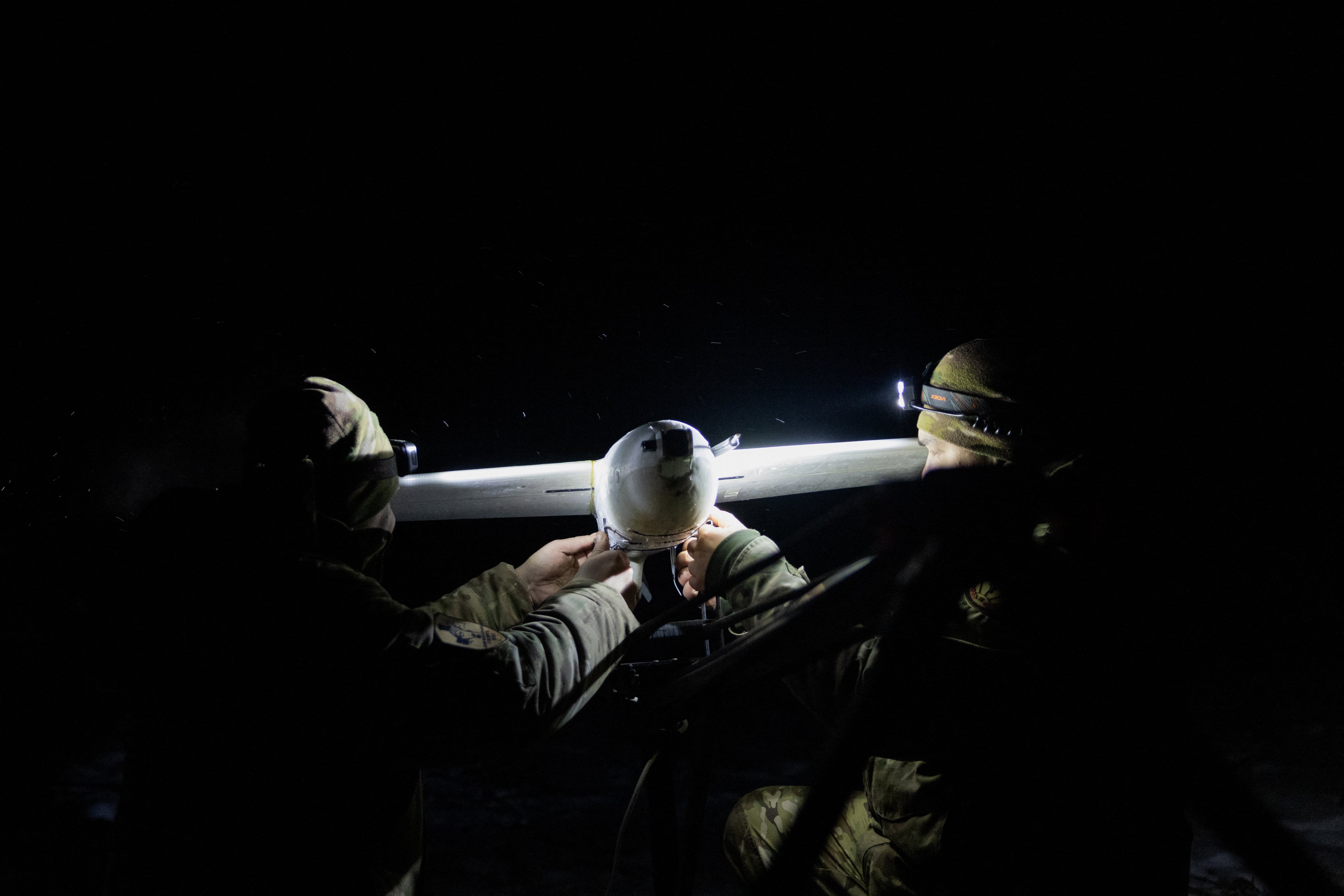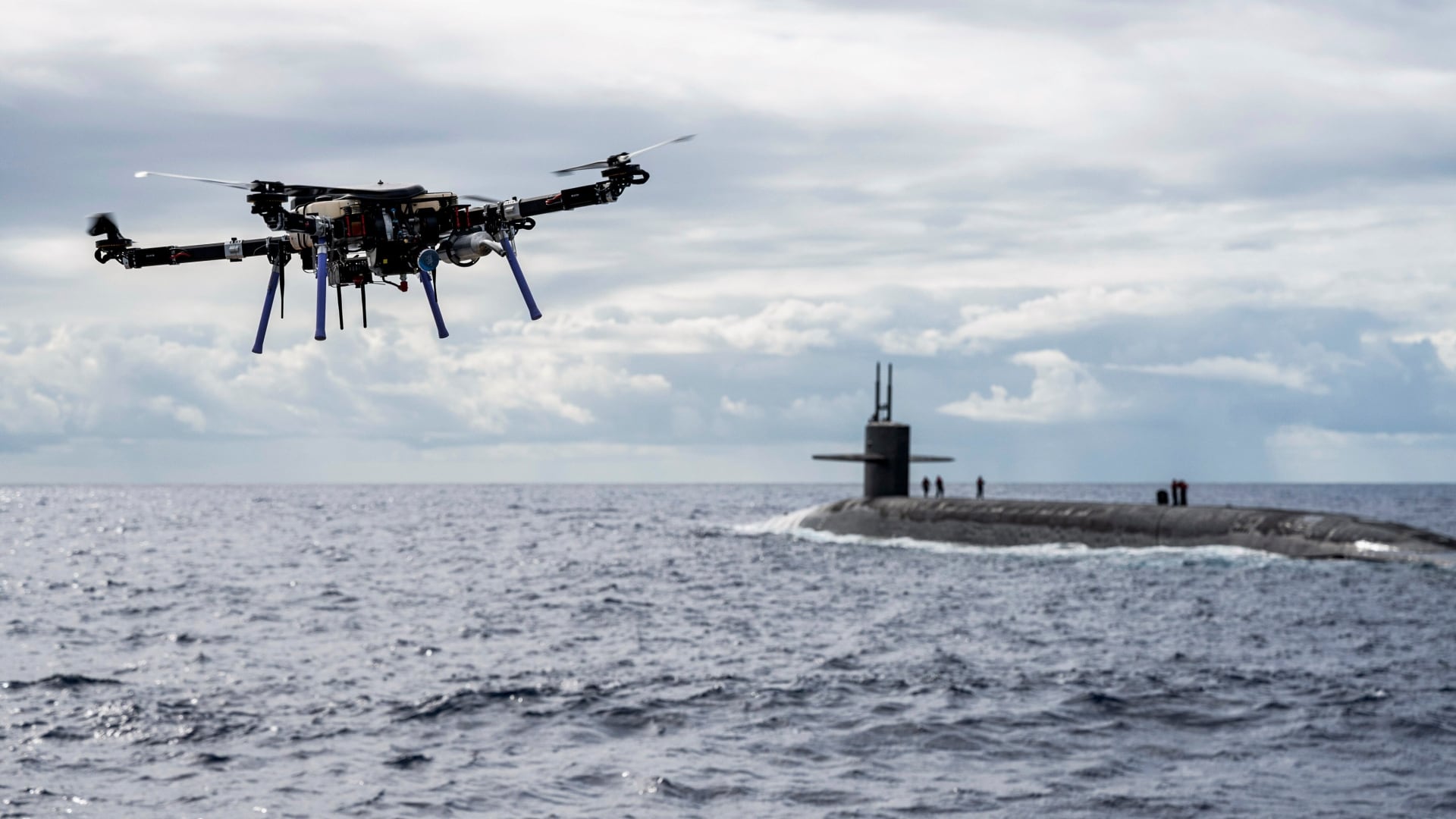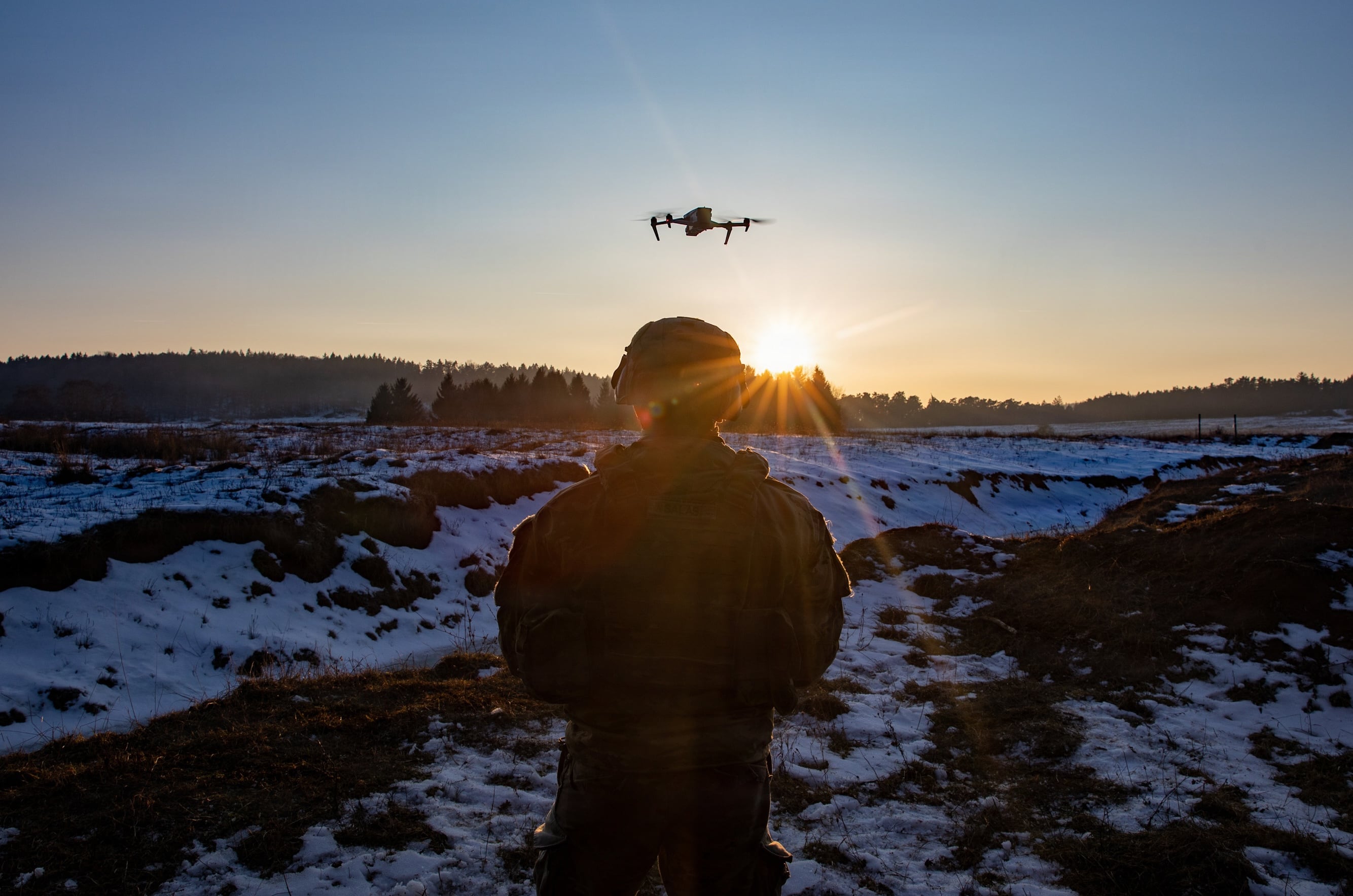
The Defense Department this week began testing for the initial phase of its Drone Dominance Program, an effort to expand the use of commercial drones across the military.
Dubbed “the Gauntlet,” military operators will fly and evaluate uncrewed aerial systems, or UASs, at Fort Benning, Georgia, to determine which of the 25 competing vendors will advance to the next phase of the program.
However, ahead of the testing, DOD curated a list of commercial drones that meet baseline performance and compliance standards. With the list, officials aim to streamline procurement and encourage military leaders to begin buying and fielding approved systems sooner rather than later.
In December, the Defense Contract Management Agency launched the Blue List UAS website, which catalogs 54 drone models cleared, at a minimum, for training use.
Of those, 29 also received the “select” label, indicating they passed a competitive review process and are authorized for operational deployment.
With so many drone models available and the pace of change accelerating, a central question of what DOD is looking for in a commercial drone remains.
Although many observers point to use of expendable drones in the Russia-Ukraine war as motivation behind the program, DOD first established the Blue UAS program in 2020 to mitigate cybersecurity risks and reduce reliance on foreign-made components.
The Blue UAS program emerged from the National Defense Authorization Act, which prohibits the federal government from using drones and drone components from countries considered a security risk.
Experts say the Blue UAS program takes NDAA compliant drones a step further.
For a drone to be added to the Blue UAS list, it must pass rigorous testing and cyber security evaluations. In other words, a Blue UAS is an NDAA-compliant drone that’s been officially tested in the field for performance and approved by the Pentagon.
And the Blue UAS designator continues to matter. According to a report by the Institute for Defense & Government Advancement, Chinese companies dominate the global drone supply chain with an estimated 90% control of the commercial drone market. In turn, it’s difficult to manufacture drones without using Chinese-made parts.
“While these Chinese-made motors are referred to as “dumb components” experts say the issue is less about espionage risk and more about availability and resilience,” the IDGA report said. “In a conflict or trade disruption, U.S. drone production could stall almost immediately due to reliance on Chinese supply chains.”
Using the Blue UAS designator, the Pentagon, along with the federal government as a whole, aim to not just equip troops with new technology but to also boost domestic drone production.
For its part, the Pentagon’s plan is to invest over $1 billion in the U.S. drone market over the next two years through the Drone Dominance Program.
Following the “Gauntlet” testing, which is scheduled to end in March, it will resume testing every six months until 2028.
By the end of the program, the department aims to have acquired some 300,000 drones and named five primary vendors.